
Succulent Science Education
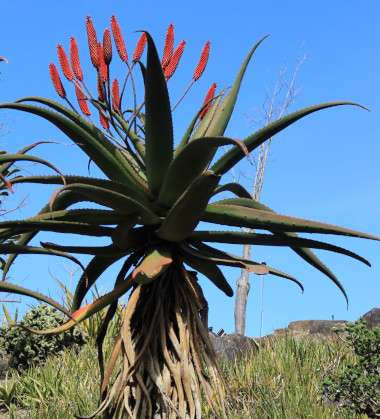
Common Name
Aloe, aloe vera, True Aloe, Medicine Plant, Burn Plant, Wonder-plant
- Habitat
- Hybrid, with origins from Africa. Its cultivation is extensive and as an example, it is a common garden plant in Southern California. There is 400 plus species of Aloe.
- Care
- Requires little maintenance, easy to grow. Water regularly and allow pot to dry out completely before re-watering.
- Location
- Indoors or out until nights dip below 45 degrees. Indirect light produces greener leaves.
- Observation
- The more direct the light the leaves change from green to reddish brown. As the direct light goes to indirect the leaves return to vibrant green.
- Geology
- Aloe vera is cultivated around the world. It has escaped from cultivation and become naturalised in the Mediterranean, north Africa, the Indian subcontinent, South America and the Caribbean.
- Kingdom
- Plantae
- Science
- Scientific study of plants. Botanical research increase and improve our supply of medicines, foods, fibers, building materials, and other plant products.
- Life Science, Biochemistry, Bilogical Sciences, Biology, Plant Biology, Microbiology, Entomology.
- Conservation
- Not considered to be threatened.
- Resource
- More Info
- More Info
- More Info
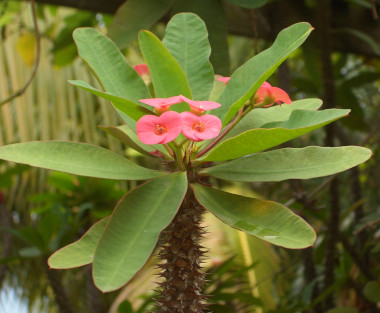
Common Name
Crown of Thorns, Christ plant, Christ thorn
- Habitat
- The crown of thorns cactus (Euphorbia milii) is an evergreen, succulent plant, native to Madagascar, however it has been successfully acclimatized and grown commercially in many parts of the world.
- Care
- Very hearty, require little maintenance, easy to grow. Drought tolerant. Allow soil to dry out.
- Location
- Indoors or out until nights dip below 45 degrees. Appreciated for its showy flowers and lush, thick, gray-green leaves, the crown of thorns is a good choice for outdoor beds or mixed borders in U.S. Department of Agriculture hardiness zones 10 through 15. In cooler regions subject to frost, it does well as a houseplant in a sunny window and can successfully overwinter indoors.
- Observation
- If leaves fall off either too much or too little water. Do not let water stand on roots, causes rotting. Too much sun causes leaves to fall off, thus introduce to outside sun gradually if moving from indoors to out. Prefers to stay in one location once established. Likes full sun during part of the day.
- Geology
- There exists substantial evidence that the species, native to Madagascar, had been brought to the Middle East before the time of Christ.
- Kingdom
- Plantae
- Science
- Scientific study of plants. Botanical research increase and improve our supply of medicines, foods, fibers, building materials, and other plant products.
- Life Science, Biochemistry, Bilogical Sciences, Biology, Plant Biology, Microbiology, Entomology.
- Conservation
- Threatened, rare
- Resource
- More Info
- More Info
- More Info
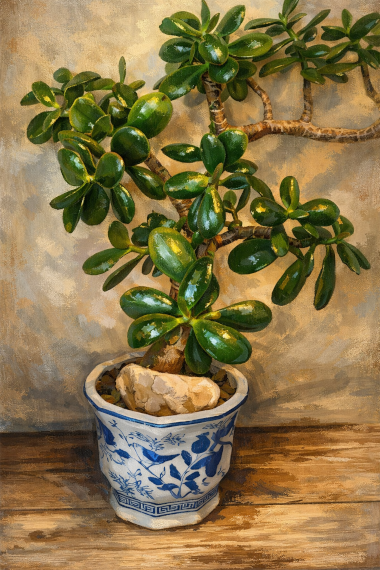
Common Name
Jade Plant, Friendship Tree, Lucky Plant, Money Plant
- Habitat
- Native to South Africa, though as a houseplant they are worldwide. Wild in open forests, on sandy-clay grey soil.
- Care
- Very hearty, require little maintenance, easy to grow. Water regularly, let soil dry between watering. They will sunburn if they are suddenly moved from subdued lighting to full sun, thus move gradually to avoid sunburn.
- Location
- Indoors or out until nights dip below 45 degrees. Indirect light produces greener leaves.
- Observation
- The more direct the light the leaves change from total green to a rim of reddish brown on the leaves which is fine. Be careful outside in direct noon day sun that can burn the leaf. Leaves grow back if lost to drought, too much sun or cold.
- Geology
- Jade plants are cultivated around the world orginating from South Africa. It is grown indoors and out in Europe, North America, East Asia and practically worldwide for over a hundred years.
- Kingdom
- Plantae
- Science
- Scientific study of plants. Botanical research increase and improve our supply of medicines, foods, fibers, building materials, and other plant products.
- Life Science, Biochemistry, Bilogical Sciences, Biology, Plant Biology, Microbiology, Entomology.
- Conservation
- Not extinct.
- Resource
- More Info
- More Info
- More Info
- More Info